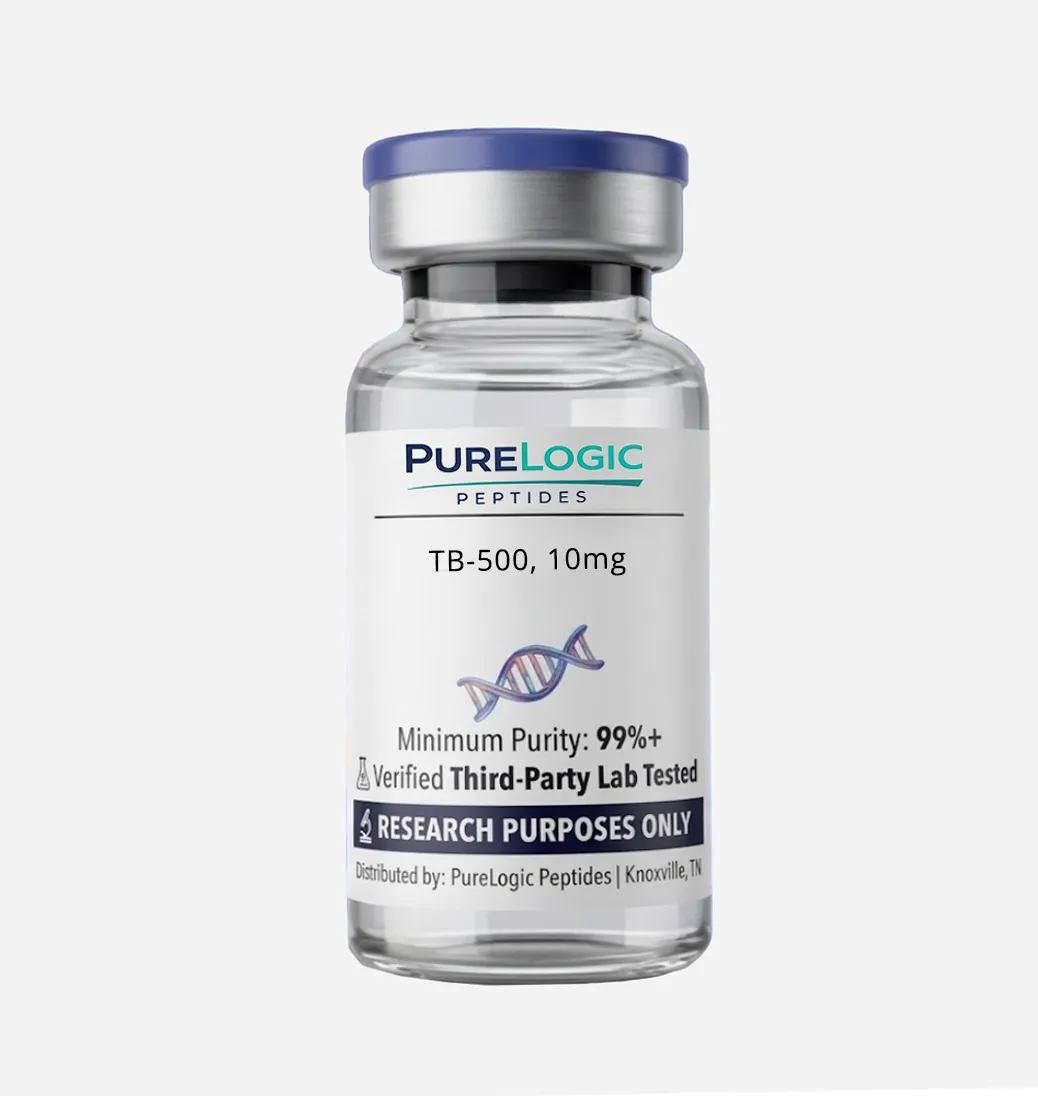
TB-500

TB-500 is a synthetic peptide fragment derived from thymosin beta-4 (Tβ4), a naturally occurring protein found in most mammalian cells. It has been widely studied in research settings for its role in cellular migration, actin regulation, and tissue response signaling pathways. In simple terms, researchers use TB-500 to better understand how cells move, organize, and …

$45.00

TB-500 is a synthetic peptide fragment derived from thymosin beta-4 (Tβ4), a naturally occurring protein found in most mammalian cells. It has been widely studied in research settings for its role in cellular migration, actin regulation, and tissue response signaling pathways. In simple terms, researchers use TB-500 to better understand how cells move, organize, and respond during repair-related biological processes in controlled laboratory models.

From a technical standpoint, TB-500 corresponds to a functional region of thymosin beta-4 that is involved in binding actin, a key structural protein responsible for cell shape and movement. Through this interaction, TB-500 is studied for its effects on cytoskeletal dynamics, cellular migration, and angiogenesis-related signaling pathways. It is often investigated in models involving tissue repair mechanisms, inflammation resolution pathways, and extracellular matrix remodeling.

In preclinical research, TB-500 is commonly evaluated within regenerative biology and cell signaling studies, particularly those focused on wound healing models, soft tissue response, and vascular development pathways. Its activity is dependent on cellular context, concentration, and experimental conditions, and its mechanisms continue to be explored in ongoing scientific research.

TB-500 is intended strictly for laboratory research purposes only and is not approved for human consumption, medical use, or diagnostic applications.

Key Research Areas

  • Actin regulation and cytoskeletal dynamics
  • Cellular migration and tissue signaling pathways
  • Angiogenesis and vascular development research
  • Extracellular matrix (ECM) remodeling
  • Wound healing and tissue response models

Chemical Information

  • Compound Name: TB-500 (Thymosin Beta-4 Fragment)
  • Type: Synthetic peptide fragment
  • Origin: Functional region of thymosin beta-4 (Tβ4)
  • Mechanism: Actin-binding cytoskeletal regulatory peptide
  • Research Focus: Cellular migration and tissue repair signaling

Important Notice

This compound is sold strictly for laboratory research purposes only. It is not intended for human consumption, medical treatment, or diagnostic use. Proper handling and regulatory compliance are required by the purchaser.

Additional information